

How to Remove and Prevent Metal Stains in Swimming Pools
Fixing a Swimming Pool’s Metal Stains
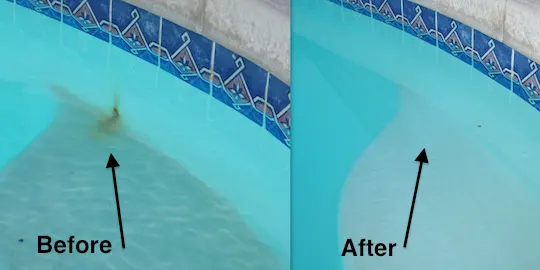
Swimming pools with water sourced from a well are prone to developing stains due to the presence of heavy metal compounds like iron, copper, silver, and manganese.
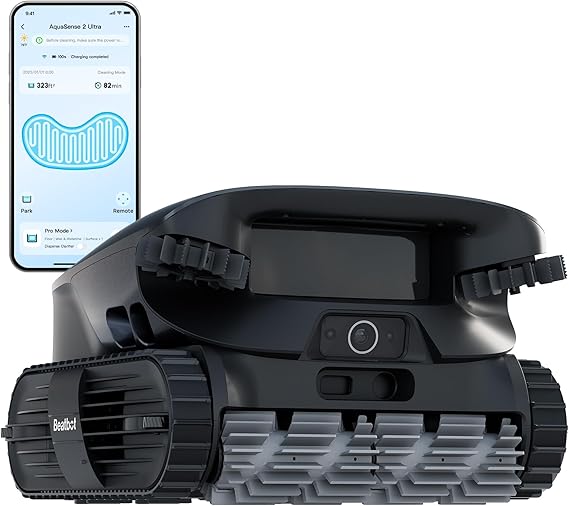
Beatbot AquaSense 2 Ultra
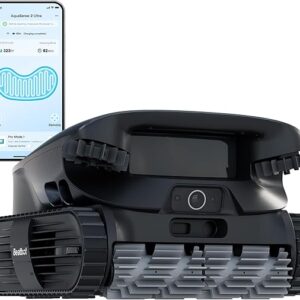
AquaSense 2 Ultra 是一款功能强大的 AI 驱动型五合一无线泳池清洁机器人,专为面积达 3,875 平方英尺的地下和地上泳池而设计。它能够以智能精准的方式清洁泳池的每个角落:
- ✅ 脱脂牛奶 漂浮物 从表面
- ✅ 磨砂膏 坚固的水线积聚
- ✅ 攀爬和清洁 墙壁
- ✅ 吸尘器 地板污垢和沙子
- ✅ 澄清并增强 水体清澈度
Oxidized iron turns pool parts and water to a brown or rusty color, copper turns pool parts and water to light green, silver turns pool parts and water to black, and manganese turns pool parts and water to purple.
Metal stains occur mainly when chlorine is added to water, oxidizing these heavy metals to produce different stain colors, depending on the metals present in your water. These stains might occur at different places inside and around your pool, including:
- in the pool water
- along the bottom or walls of the pool
- along a vinyl liner or on fiberglass surfaces
- across the steps or on various pieces of pool equipment
In this article, we will break down how to:
- test the water for metal stains,
- get rid of metal stains in five steps, and
- prevent staining in the future.
Testing the Pool Water—Is It Metal Staining or Algae?
Before taking any action to undergo treatment for metal stains, you need to be certain of its metal staining. Green or black stains might indicate metal stains, but they may also occur due to green or black 藻类. Do the vitamin C test by using ascorbic acid to determine whether it’s metal staining or not:
- Hold a vitamin C tablet against a portion of the stain for about 30 seconds.
- If the stain vanishes or lightens, then it is a metal stain and not algae.
Get Rid of Metal Stains in 5 Easy Steps
Here is an easy five-step breakdown of how to remove metal stains from your pool.
1. Lower the Free Chlorine Level to 0.0 ppm
Before adding ascorbic acid, ensure that you take down the chlorine level to 0.0 ppm using a neutralizing chemical, direct sunlight, or partially draining and refilling your pool with fresh water. Lowering chlorine to 0.0 ppm is necessary, as chlorine will cause more stains, and you may need more ascorbic acid to clear the stains.
重要提示: Since clearing all-metal stains may take a couple of days with zero-free chlorine, you can use ProTeam Polyquat 60 Algaecide. I recommend this because it has no copper compounds that may worsen the stains, has no ammonia that can cause extremely cloudy water that is not easy to clear, and can effectively fight and prevent any algae that might thrive in your water.
2. Lower the pH Level to 7.2
Lower your pH level to 7.2 using muriatic acid if it’s higher than that. This is necessary since high pH levels may need a lot of ascorbic acids to clear metal stains and may also contribute to more metal staining, which is what you need to get rid of. I prefer muriatic acid since pH minus will not lower the total alkalinity (TA)—and high TA might cause pH to scale high if clearing stains takes longer.
3. Run the Filter and Add Ascorbic Acid
- Put your pool’s filter on circulation.
- You need about 1 pound of ascorbic acid for every 10,000 gallons. So the amount to add will depend on the volume of your pool.
- Using a tin or a cup, drop the ascorbic acid down the sides of the pool all around the perimeter, targeting most stain-affected areas.
- Let the ascorbic acid circulate for around 30 minutes, and watch the metal stains fade away slowly before your eyes. If you still see small stains after 30 minutes, add more ascorbic acid to those spots while the filter is on for at least 24 hours.
- After 24 hours, all the stains should have faded away. Start re-balancing your water chemistry after 24 hours.
4. Get pH and Alkalinity Back to Normal Levels
Ascorbic acid is strong and will definitely bring down pH and TA levels. If the pH and TA are not way out of balance, you can use 20 Mule Team Borax to raise the pH without affecting TA and an alkalinity increaser to bring the TA up to recommended levels when it gets low. Add these chemicals slowly while testing until they get to recommended levels since you don’t want pH or TA to get out of balance.
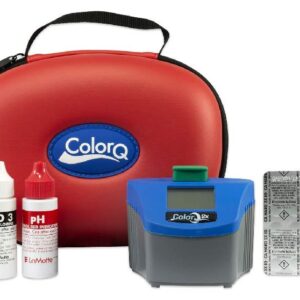
Remember that pH should be maintained between 7.4 and 7.6 to avoid metal staining. I prefer using LaMotte ColorQ Pro 7 digital pool water test kit since it is very accurate and fast in taking all chemical readings. If you get your pH and TA out of balance by mistake or they get troublesome to balance, here is more about how you can balance pH and TA.
5. Get Chlorine Back to Normal Levels
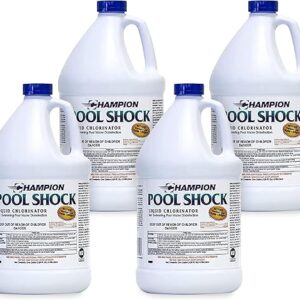
Raise your free chlorine level to 1.0 or 2.0 and leave it there. You need to use liquid chlorine bleach for this purpose.
Be cautious while adding chlorine, and watch for any staining in the process. Ensure that you keep your chlorine at the minimum level possible, depending on the available cyanuric acid level.
You can use a chlorine/cyanuric acid chart 或者 pool calculator to find the accurate amount of free chlorine you need.
After getting the chlorine to the recommended level between 1 and 2 ppm, avoid shocking your pool for about two weeks to allow the ascorbic acid to be completely used up. After about two weeks, you will notice chlorine being used up as usual. You can then begin to 冲击你的泳池 carefully to avoid adding excess chlorine.
重要提示: High pH levels and chlorine will definitely precipitate any metal compound in your water if not treated (sequestered) or removed from your water.
3 Ways to Prevent Metal Staining in the Future
Here is a breakdown of three simple ways to prevent metal stains from building up in the future.
1. Remove Metal Compounds From Your Fill-Water
Some years back, before the CuLator metal eliminator was available, there were no practical ways of removing metallic compounds from pool fill water before entering your pool. The only possible way was to treat water inside your pool, which is hard work and expensive to maintain.
CuLator Ultra Power Park is now my best option for this because you can use it in the skimmer or pump basket to remove up to 4 ppm metal compounds from 20,000 gallons of fill water before entering your pool. If your pool is more than 20,000 gallons, you can increase your parks and use them both in the skimmer and pump basket.
CuLator should work for up to 30 days or longer depending on the metal level in your water and is replaceable once worn out.
However, the easiest way to avoid stains in your pool is to avoid filling the water with metals. Before installing your pool, it is important to test your water source for metal content and avoid water sources with metals in it at all costs because maintenance will be relatively hard and expensive in the long run.
Moreover, you need to be careful with the chemicals you add to your pool since copper may find its way into your pool from chemicals such as algaecide or ionizer—and eroded pool parts with copper. If you can’t use CuLator for any reason, detailed below are more ways to control metal stains in your pool.
2. Add Metal Remover to Your Pool Water
Metal remover is one of my best options because it works by removing heavy metals in your pool water through the filter, leaving your water clean and free of heavy metals that cause stains when chlorine is added, or pH levels scale high. Metal Magic by Pro Team is my preferred option since it removes all common metals from your water, including copper, iron, silver, and manganese.
Metal Magic is non-foaming, pH neutral, and won’t affect your pH levels or cause foaming inside and around your pool. Moreover, it also removes current metal stains from your pool and scales from surfaces. It crystallizes and removes metals from pool water through the pool filter. Metal Magic is compatible with all types of filtration systems, and it doesn’t matter which filter your pool runs on. This product also protects plumbing and equipment, which is an added advantage for your pool parts.
If you decide to use Metal Magic, the product dosage for initial treatment is 32 fluid ounces per 10,000 gallons of water. That is, if you have a 20,000-gallon pool, you will add 64 fluid ounces to be able to remove all metal compounds in your pool water.
After the initial treatment dose, you will need to add this metal remover after a given period to keep your water free of metals. The routine maintenance dose should be between 3–6 fluid ounces per 10,000 gallons of water per month.
The second option I highly recommend for pool owners is Orenda SC-100. It’s one of the most effective calcium and metal stain reducers on the market, and I prefer it when fighting high calcium levels, calcium build-up, and scales, both in harsh chlorine-based pools and saltwater pools.
This product is nontoxic and nonhazardous to your pool since it contains no phosphorus, which is a major contributor to algae growth in swimming pools. Like Metal Magic, Orendas SC-100 prevents and removes calcium from pool surfaces and prevents metals from staining pool surfaces when chlorine is added.
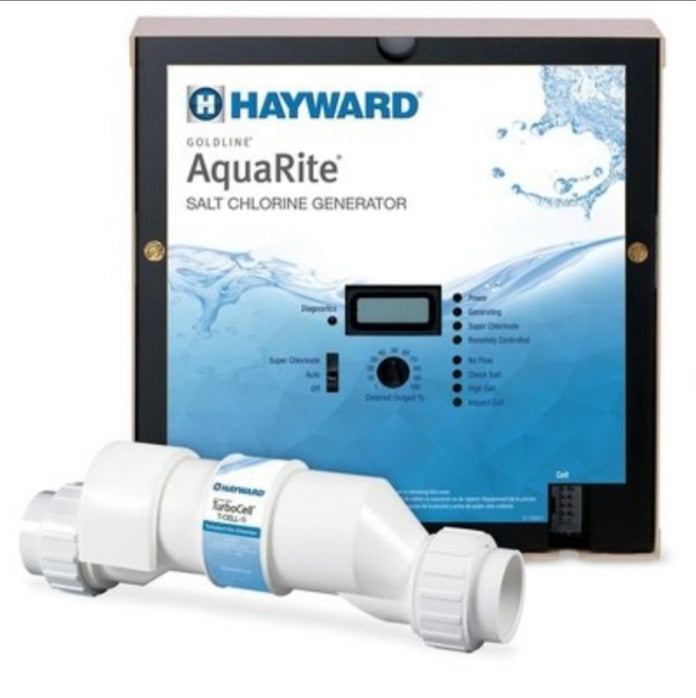
Moreover, this product improves the life and functionality of salt chlorine generators by preventing scaling, which extends salt cell life and stops calcium build-up before it starts. I specifically recommend Orendas SC-100 for saltwater pools that have metals, scales, and calcium build-up.
Orenda SC-100 should be added in an initial dose for better results and frequent maintenance doses to keep heavy metals from your water.
For the initial dose, 1 quart per 10,000 gallons should be added when the pool is full. For maintenance doses, 6 ounces per 10,000 gallons every other week is enough to get rid of all metals in your water and prevent metal staining when chlorine is added, or pH scales high for any reason.
3. Add Metal Sequestrate in Your Pool Water
Metal sequestrate should be the last option to use in a pool because it works differently from metal removers like Metal Magic and Orendas SC-100. Metal sequestrate does not remove metals in your pool water. Still, it naturally binds to the metals, holding metal particles together in your water so that they don’t come out of the solution to react with chlorine when added to your water or when pH levels get too high.
Ideally, regular doses of sequestrants will prevent metal staining when chlorine is added to the water and slowly break down. Therefore, they should be introduced regularly in your pool water to maintain the right level to keep stains away.
The most effective sequestrants are derived from phosphoric acid, and the best in the market today is Pool Mate Metal Out. This product helps prevent discoloration of pool water from iron, silver, manganese, copper, and other metals and minerals that may be present in the water supply.
Pool Mate Metal Out is an excellent general-purpose sequestrant that helps protect plumbing and pool walls from rust, stain, and scale. It should be used for pool openings and closings and throughout the season. For best results, add one quart per 10,000 gallons weekly, and you will never have metal stains in your pool.
Comments
Barack James (author) from Green City in the Sun on July 12, 2019:
Thanks Connie I will appreciate, sharing is caring.
Connie on July 12, 2019:
Definitely gonna try this and im sharing. Thanks.
Barack James (author) from Green City in the Sun on July 08, 2015:
Thumbi7: Thanks alot for your comment, that’s so encouraging. Thanks for sharing too, it will definitely help someone.
JR Krishna from India on July 08, 2015:
Very informative hub. Interesting read
Voted up and shared
 Chinese
  English